All Categories
Featured
Table of Contents
Not long ago, the expression development marketing quickly conjured images of seed-stage companies stuffed into co-working areas, driven by caffeine, code, and the unrelenting pursuit of product-market fit. It was the domain of creators and early workers using 6 hats, shipping tests at midnight, and going after any lever that might keep the business alive for one more quarter.
Today, it's mid-market brand names that are embracing development marketing for scaling. They're doing it not because it's stylish, however since the environment around them has actually fundamentally shifted. The old marketing playbooks aren't providing like they utilized to. Conventional demand gen is hitting decreasing returns. And leadership is demanding smarter, more foreseeable paths to earnings.
They have more information than start-ups, more dexterity than business, and more pressure than ever to grow effectively. And development marketing techniques offer them precisely what they need: flexibility, experimentation, and a rigorous, data-backed operating system for scaling smarter. Development marketing has constantly been misunderstood. It's often incorrect as a play ground of A/B test this, tweak that, try whatever, hope something sticks.
At its core, B2B growth marketing is a full-funnel, cross-functional method to profits creation. It doesn't stop at acquisition or obsess over MQL counts. It spans the whole buyer and customer lifecycle of activation, adoption, expansion, and retention with experimentation developed into every stage. It aligns sales, marketing, item, and consumer success around shared realities: revenue over vanity metrics, insights over assumptions, and rapid iteration over stiff project calendars.
Optimizing Your UK Workforce for 2026
They're seeing what in fact works. They're operationalizing those learnings. And they're constructing repeatable motions that scale. It's not growth for development's sake, it's development with intention. And that's precisely what mid-market companies need most today. Over the previous couple of years, mid-market business have found themselves at an inflection point.
Spending plan restraints have actually forced teams to inspect every dollar. Growth marketing is built for exactly that concern.
Mid-market groups are realizing that enhancing acquisition alone won't resolve the efficiency space. In classification after category, mid-market brand names are discovering themselves drowned out by enterprise giants with bigger budgets and startups with louder voices.
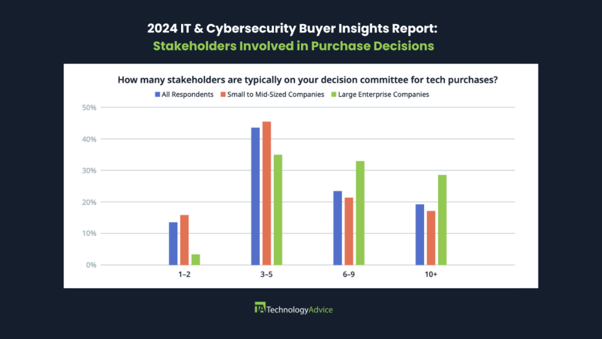
Development marketing brings the experimentation state of mind that helps groups discover new angles, brand-new stories, brand-new channels, and brand-new methods to distinguish. And of course, technology has lastly caught up. Tools that once required business spending plans are now accessible to mid-market groups, with AI decreasing the barrier even further. Data is cleaner.
Testing is simpler. The infrastructure is finally in location, making development both possible and scalable. When mid-market teams adopt development marketing, they rapidly find that it's an operating system, and not a set of tactics. Development marketing for scaling still begins with a strong structure: placing and ICP positioning. No amount of screening can save unclear messaging or an audience inequality.
How to Navigate British Investment Trends for 2026
With that foundation in place, B2B development marketing teams take full ownership of the funnel, looking at acquisition, activation, adoption, expansion, and retention as one interconnected system instead of separate department KPIs. This alone transforms how teams believe about earnings.
How to Drive Next-Gen AI in 2026And, crucially, whatever is documented, learnings substance, wins become playbooks, playbooks end up being procedures, and procedures become predictable development. Development marketing forces marketing, sales, item, and CS to operate as a single revenue engine.

Development sprints combine everyone around shared objectives and shared information. It's one group, one funnel, one outcome. This is where mid-market brands have a natural advantage: They are small enough to collaborate, yet huge enough to scale. Across the business we support, a clear set of high-impact, scalable growth plays keeps emerging.
How to Navigate UK Capital Markets for 2026Mid-market teams are tightening up onboarding, improving trial conversions, and building expansion triggers that turn clients into long-term earnings contributors. ABM, once a heavy enterprise motion, is merging with development principles, resulting in lean, signal-based programs that provide customization without intricacy.

Latest Posts
A Deep Outlook for 2026 Leadership
Optimizing IT Systems for British Success
Smart Tactics to Fuel 2026 UK Growth